
Social Media Marketing for Businesses: Small Business Guide
Wednesday, March 11, 2026

Social media marketing is easier when you treat it like a system, not a daily scramble for post ideas. The goal is simple: show up consistently, earn attention with useful content, and track what drives real business results.
Start with one clear goal (then pick the right metric)
Before you choose platforms or design graphics, decide what “working” means for your business. A few common goals:
- Brand awareness: reach, impressions, profile visits
- Community growth: follower growth, comments, saves, shares
- Leads or sales: website clicks, form fills, purchases (and the cost to get them if you run ads)

Choose 1–2 platforms to start (not five)
Small businesses usually get better results by focusing on the channels they can realistically maintain.
A quick way to decide:
- If visuals sell the product: prioritize Instagram, TikTok, Pinterest
- If you sell services locally: prioritize Facebook, Instagram, Google Business Profile (as part of your wider digital marketing mix)
- If you sell B2B: prioritize LinkedIn, YouTube (for explainers and case studies)
You can expand later once you have a repeatable posting workflow.
Set up your profiles like landing pages
Your profile should answer three questions in five seconds:
- What do you do?
- Who is it for?
- What should I do next?
Basics that matter:
- Clear business name and category
- Short bio with what you offer and where you serve
- A simple call to action (book, call, shop, get a quote)
- A link to the most relevant page (not always your homepage)
If you are setting up a Facebook Page for the first time, Meta’s own guidance walks through the essentials: Facebook Page Setup.
Build 3–5 content pillars (so you never run out of ideas)
Content pillars are repeating themes that make planning easier and keep your message consistent. Here’s a set that works for many small businesses:
- Teach: quick how-to, FAQs, myth-busting
- Proof: testimonials, before/after, customer stories, UGC
- Behind the scenes: process, team, day-in-the-life
- Offers: promotions, bundles, seasonal services
- Community: local partnerships, events, shout-outs

Aim for a mix. If every post is a pitch, people tune out.
Use a content calendar to stay consistent

Consistency beats intensity. A simple content calendar helps you plan ahead, avoid last-minute stress, and keep your feed balanced.
A starter weekly cadence (adjust to your capacity):
- 2 short-form videos (tips, demos, behind the scenes)
- 2 photo or carousel posts (proof, product, education)
- 3–5 Stories (lightweight updates, polls, Q&A)
If you want ideas for what to include in a calendar and how to structure it, Sprout Social has a clear guide you can model: Content Calendar
Engagement is a business activity, not an extra
Set a 10–15 minute daily block for community management:
- Reply to comments quickly
- Answer DMs with saved replies for common questions
- Comment on posts from customers, partners, and local groups
- Save questions you get repeatedly and turn them into posts
This is often where small businesses win, because your competitors are busy broadcasting and nobody is talking back.
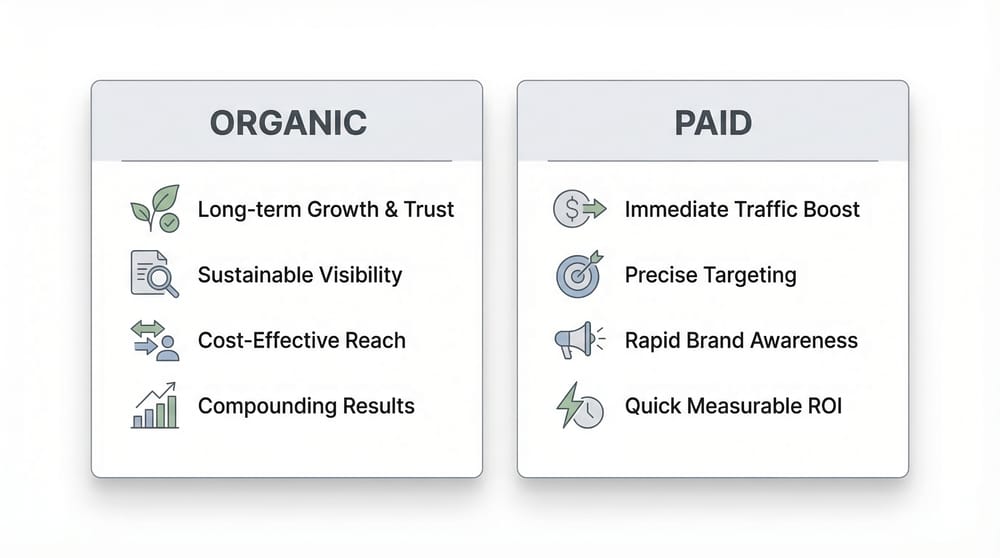
Organic vs paid: when to add ads
Organic content builds trust and a “why you” story. Paid social helps you reach more of the right people faster.
Consider ads when:
- You have an offer that already converts (even a little)
- You know your best service area, ideal customer, and price point
- Your landing page is clear and mobile-friendly
Start small: promote your best-performing organic post or run a simple lead campaign with one clear call to action.
Track what matters with UTMs (so you know what posts drive results)
If you only look at likes, you will guess wrong about what makes money.
Use UTM parameters (tags added to your links) so Google Analytics can attribute traffic to a specific platform, post, or campaign. Google’s official guide on URL builders and campaign tracking is here: URL builders and campaign tracking
Create one tracked link per campaign, then reuse it consistently for that offer.

A simple 30-day social media marketing plan (small business-friendly)
Week 1: Setup
- Clean up profiles and CTAs
- Pick 3–5 content pillars
- Draft 10 post ideas and 5 short videos
Week 2: Publish and learn
- Post 3–4 times
- Save questions and objections from comments and DMs
- Identify your top post by saves, shares, and clicks
Week 3: Improve
- Make “part 2” versions of your top content
- Test one new format (video, carousel, live, Stories Q&A)
Week 4: Measure
- Review your traffic and conversions (use UTMs)
- Decide: double down, revise, or drop what is not working
- Plan next month’s calendar based on what performed
Need help with Your Social Media Marketing?
BeaverRo Digital is a leading Social Media and Digital Marketing Agency in Burlington. We'd love to learn more about your business needs and craft a tailored social media strategy to help you succed.
Contact us today, we are here to help!
Marketing funnels for small businesses that need more booked calls, leads, and customers.