Networking Follow-Up Strategy: What to Do After the Event
Thursday, July 23, 2026
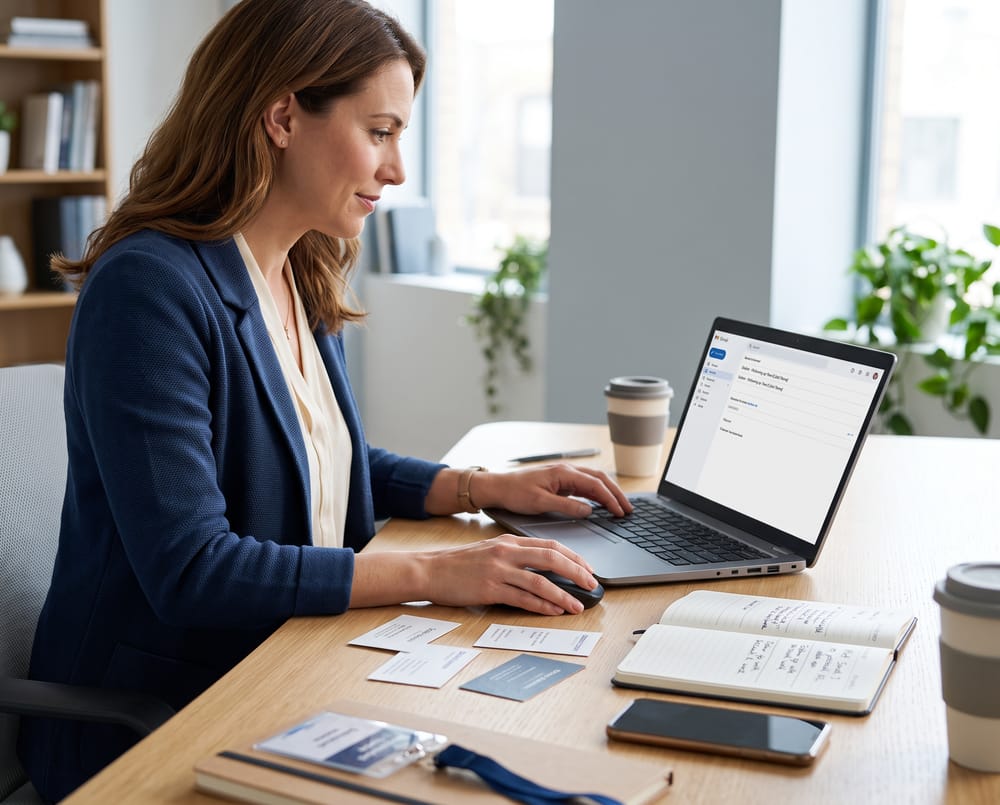
Networking events can feel productive in the moment. You meet new people, exchange business cards, have a few promising conversations, and leave with the feeling that something could come from it.
Then the week gets busy.
The cards sit on your desk. The names fade. The conversations lose momentum. A few weeks later, the event feels like another activity that took time, money, and energy but did not lead anywhere.
The problem usually is not the event. It is what happens after the event.
A strong networking follow-up strategy helps turn brief introductions into real business relationships. Not every contact will become a customer, and not every conversation will lead to a referral. Still, when you follow up with consistency, value, and patience, you give the relationship a chance to grow.
Networking Is Not the Sale
People do not attend networking events because they want to be pitched on the spot. Networking events are meant to build meaningful relationships, not to sell immediately. The real opportunity begins after the event, when you follow up and continue the conversation.
That first follow-up should not be treated as a quick “nice to meet you” message and nothing more. It is the beginning of a relationship-building process. Done well, it helps you stay visible, learn more about the other person’s business, and create space for future referrals or opportunities.
Step 1: Make Contact Within 24 Hours
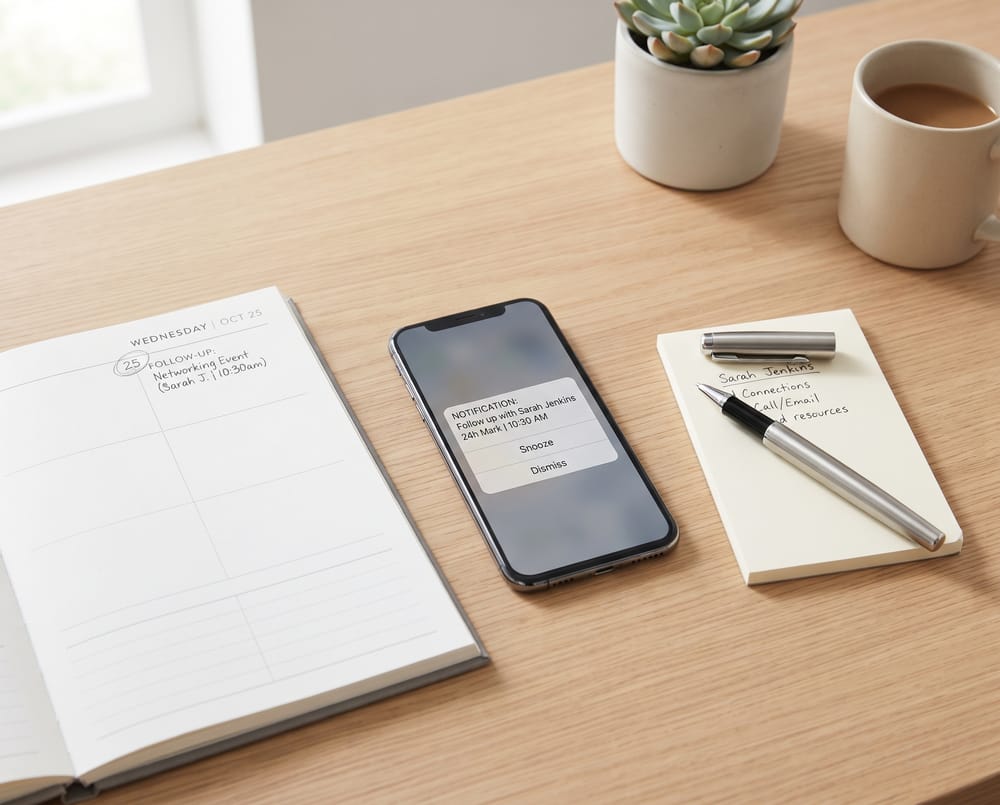
The first step is simple: reach out quickly.
Aim to call or email within 24 hours after the event. The goal is not to close a deal. The goal is to make contact while the conversation is still fresh. You can invite the person to meet for coffee, book a short call, or continue learning about their business.
Keep the message short and personal. Mention where you met, refer to something specific from the conversation if you remember it, and suggest a clear next step.
For example:
“Hi Maria, it was great meeting you at the networking event yesterday. I enjoyed hearing about your work with local business owners. Would you be open to a coffee or short call next week so I can learn more about what you do?”
This type of message feels natural because it is focused on connection, not pressure.
You should also add the person’s information to your CRM and email list if you have permission and the proper process in place. A CRM helps you avoid relying on memory and gives you a place to track follow-up dates, notes, and next steps.
Step 2: Do Not Stop After One Try

Many business owners send one message, receive no response, and assume the person is not interested. That may be true, but it is not the only possibility.
People are busy. Messages get buried. A missed call may not mean anything. It often takes more than one attempt before someone responds, which is why a short follow-up sequence is useful.
A practical sequence could look like this:
- First message within 24 hours
- Follow-up message or call 3 to 4 days later
- Second follow-up 3 to 4 days after that
- Final “break-up” email 4 days later
The final message should be polite, not dramatic. It can simply say that you understand timing may not be right and that you are happy to reconnect later.
The key is to stay professional. You are not chasing. You are creating a reasonable number of opportunities for the person to respond.
Step 3: Add Value Before Asking for Business

The strongest follow-up strategies do not rely only on one-to-one meetings. They also include helpful content.
This is where the “value first, then business” approach matters. Before someone buys from you or refers you, they usually need to trust you. Helpful content gives them a reason to keep paying attention.
Your content can take many forms: blog posts, social media posts, webinars, freebies, newsletters, checklists, guides, or short educational emails.
The format is not the most important part. What matters is that the content is useful and that it actually reaches your audience.
Since you already have the contact details of the people you met at networking events, you have a simple way to stay in touch. You can share helpful content with them, whether you had a one-on-one conversation or only met briefly.
A good piece of content should answer a question, solve a small problem, or help the reader think more clearly about a topic connected to your business.
For example, if you help small businesses with marketing systems, you might send a short checklist on how to organize new leads after an event. If you are a financial advisor, you might share a simple article about financial planning questions business owners should ask each quarter.
This should be ongoing. You should continuing to share value even when you later start promoting your offer.
Step 4: Keep Your Follow-Up From Feeling Spammy
Follow-up should feel helpful, not intrusive.
That means paying attention to sequence, frequency, and consent. If you are using email, include a clear way for people to opt out, such as an unsubscribe link. You also must comply with Canadian anti-spam regulations or the anti-spam rules that apply in the country where your audience is located.
Good follow-up respects the relationship. It gives people control. It avoids flooding inboxes. It also avoids pretending that every new contact is ready to buy right away.
A simple rhythm works best. Send useful content consistently, but not so often that people feel overwhelmed.
Step 5: Introduce Your Offer at the Right Time
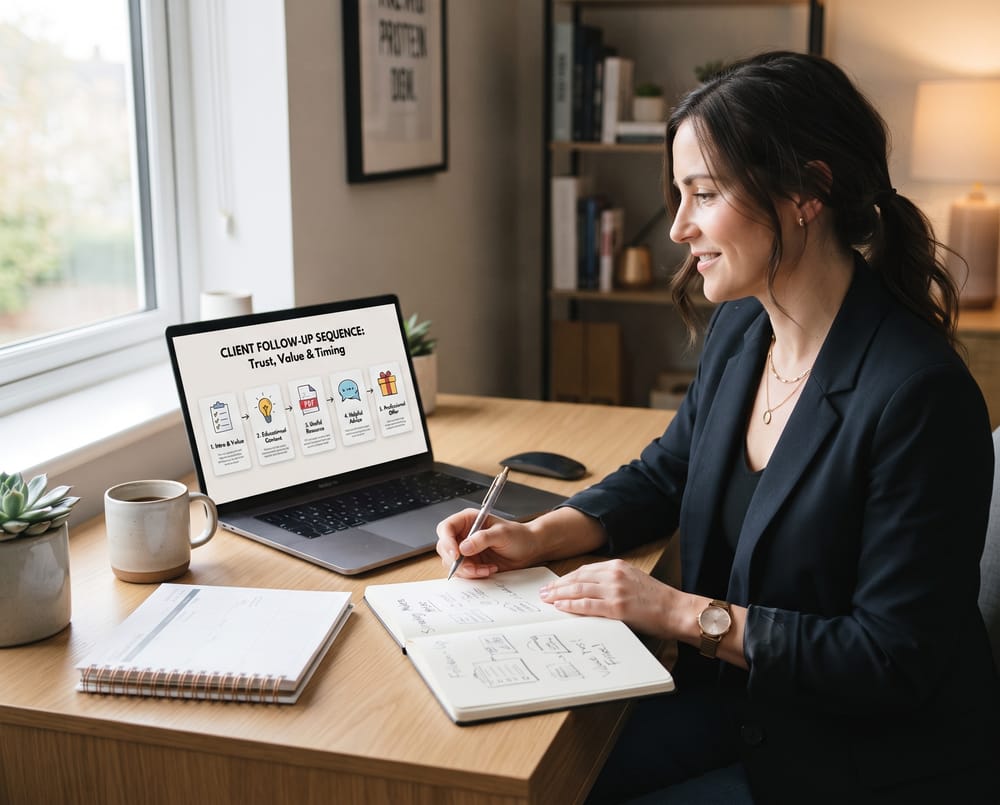
A conversion sequence is where you begin promoting your offer. This does not mean every message becomes a sales message.
Wait until your audience has received enough value before you make an offer. A good rule of thumb is to send about four helpful, value-based emails for every one email that promotes your product or service.
That balance keeps the relationship warm without making your communication feel one-sided. Your offer emails can invite people to book a consultation, download a resource, attend a webinar, or learn more about a service. The offer should feel like a helpful next step, not a sudden pitch.
Step 6: Use Automation Without Losing the Human Touch

Follow-up can become difficult when you attend events regularly. That is where automation tools can help.
You can use CRM reminders, email sequences, tags, and templates to make sure contacts do not fall through the cracks. Automation helps with consistency, but it should not make your follow-up sound robotic.
Personalize the first message. Keep notes from the event. Segment people when possible so they receive content that makes sense for them. A referral partner, a potential customer, and a casual contact may not need the same message.
Make Networking Work After the Room Empties
Networking does not end when the event ends. In many cases, that is when the real work starts.
A practical networking follow-up strategy helps you make contact quickly, follow up more than once, share helpful content, respect email rules, and introduce your offer only after trust has started to build.
The business card is not the relationship. The conversation is not the strategy. The follow-up is what gives the opportunity somewhere to go.
Do you need help automating your Networking follow-up?
We will be more than happy to help you succeed:
Marketing funnels for small businesses that need more booked calls, leads, and customers.