Why Your Ads Get Clicks but No Sales (And What to Do About It)
Tuesday, October 20, 2026
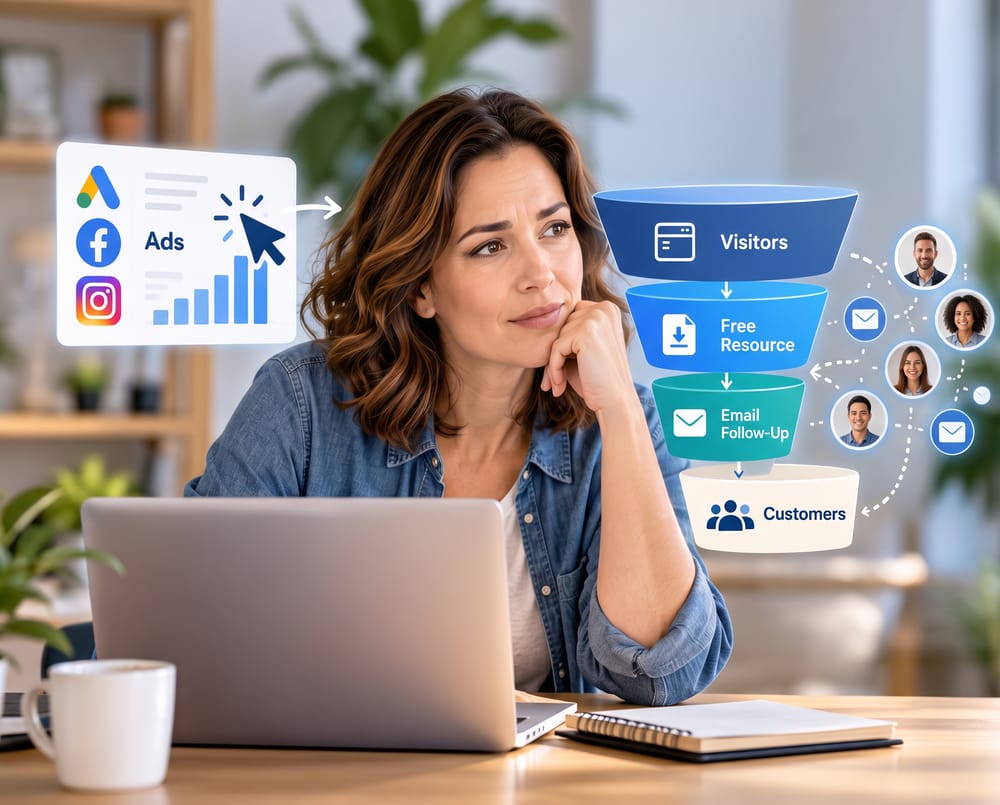
You're spending money on Google, Facebook, or Instagram ads. People see your ads, click through to your website, and then leave.
No calls. No emails. No sales.
You check your results and wonder, "Why am I paying for ads if nobody's buying?"
It's frustrating, especially when you're running a small business and every dollar matters.
You might think your ads aren't working. But here's something worth considering.
Maybe the problem isn't your ads. Maybe it's what happens after someone clicks.

Getting Clicks Is Only the First Step
Your ads have one important job: getting people interested enough to visit your website.
But clicking an ad doesn't mean someone's ready to buy.
Think about the last time you wanted to buy something. Did you purchase it the moment you saw it?
Maybe. But often, you want to learn more first. You compare options, read reviews, check prices, or wait until the timing feels right.
Your customers do the same thing.
They might like what you offer but think, "Maybe later."
And we all know what happens with "maybe later."
People get busy. They forget. They move on.
If you have no way to stay connected, that potential customer may be gone.
Why People Leave Your Website Without Buying
Not every visitor leaves because they're uninterested.
Sometimes they need more information. Sometimes they're comparing businesses. Other times, they're simply not ready to make a decision.
But there are also things on your website that might be getting in the way.
For example:
- Your offer isn't clear. Visitors don't immediately understand what you're offering or why it matters to them.
- Your website doesn't answer their questions. They want more information before contacting you.
- There's no obvious next step. They like what they see but aren't sure what to do next.
- You're asking for too much too soon. Someone who's just discovered your business may not be ready to book or buy.
That's why getting more clicks isn't always the answer.
Sometimes, you need a better plan for the visitors you're already paying to attract.
What Is a Marketing Funnel, and How Can It Help?
A marketing funnel is simply a plan for turning interested visitors into potential customers and staying connected until they're ready to take the next step.
Instead of asking everyone to buy immediately, you start by offering something helpful.
It could be:
- A short guide or checklist
- A one-page PDF with useful tips
- A free webinar or online class
- A simple resource that answers a common question
It doesn't need to be big or complicated.
It just needs to help someone solve one small part of their problem.
In return, visitors can choose to share their email addresses and receive your resource and future updates.
Now, instead of hoping they'll remember your business, you have permission to stay in touch.
You can share helpful tips, answer common questions, and occasionally introduce your services.
You're building a relationship, not just asking for a sale.
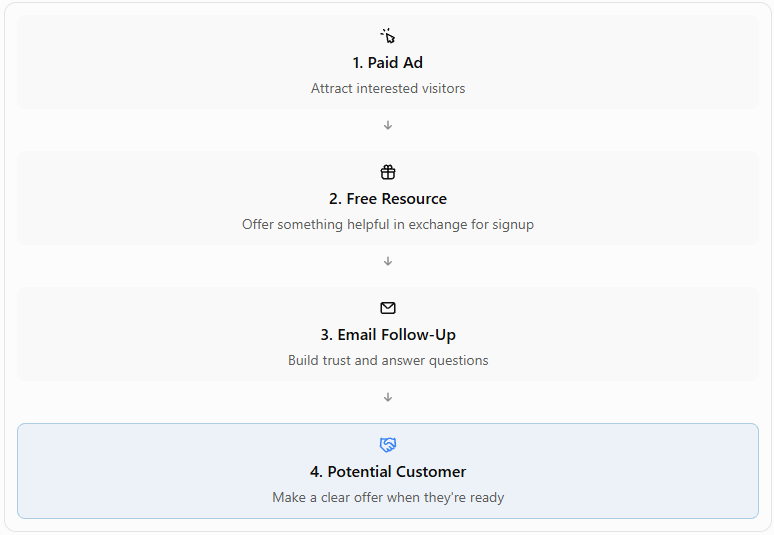
Here's What a Simple Marketing Funnel Looks Like
Let's say you offer a free webinar about a topic your customers care about.
You run Google or Facebook ads inviting people to register.
When someone signs up, they receive a confirmation email and a few reminders before the webinar.
After the webinar, you send a replay so people who missed it can still watch.
During the webinar, you share useful information and answer questions.
At the end, you introduce one clear offer.
Maybe it's a service, a consultation, or a special package.
Some people might buy right away. Others won't, and that's okay.
You can continue sending helpful emails to people who want to hear from you.
Share a tip. Answer a question. Tell a short story. Every now and then, introduce another offer.
The pattern is simple:
Help, then offer, then help again.
Over time, people become familiar with your business. They understand what you do and have more opportunities to decide whether you're the right fit.
You're Not Just Getting Leads. You're Building Your Own Audience.
Here's another reason why having a marketing funnel makes sense.
Every time someone signs up for your free guide, webinar, or checklist, you're growing your email list.
And that list can become one of your most valuable marketing assets.
Think about it. When you run ads, you pay to bring people to your website. If they leave without taking action, you may have to pay for another click to reach them again.
But when someone joins your email list and agrees to hear from you, things change.
You can reach them again and again without paying for another ad click every time.
You can share helpful tips, announce new services, introduce special offers, or invite them to future events.
And here's the best part: You're building an audience you control, instead of relying only on paid advertising to reach people.
Of course, not everyone on your list will become a customer. But you're giving interested people more opportunities to get to know your business and buy when they're ready.
So instead of paying for clicks that disappear, you're using your advertising budget to build relationships that can continue long after the first visit.

You Don't Need a Complicated Funnel to Get Started
When small business owners hear the words "marketing funnel," they sometimes imagine expensive software, complicated automation, and dozens of emails.
But you can start much smaller.
First, choose one useful resource your audience would appreciate.
Next, create a simple page where people can request it.
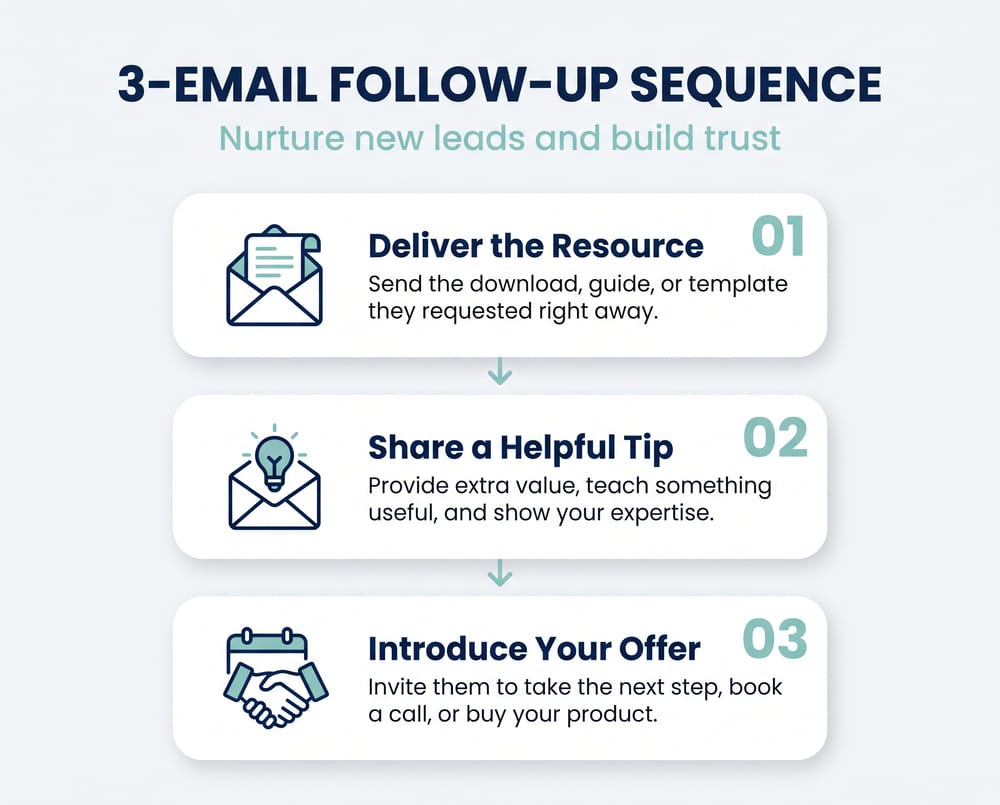
Then prepare three short follow-up email sequences.
The first delivers the resource. The second shares another helpful tip. The third explains how your business can help if they're ready.
That's enough to start testing your approach.
You can improve it as you learn what your visitors respond to.
And because people have joined your email list, you can reach them again without paying for another advertising click each time.
Just remember to respect their preferences and give them an easy way to unsubscribe.
Stop Losing Potential Customers After the Click
Paid ads can bring people to your website, but they can't do all the work.
You need a plan for what happens next.
A marketing funnel won't make everyone buy immediately. But it can help you turn more interested visitors into leads, build trust, and stay connected with people who aren't ready today.
You don't need to stop running ads.
You just need to stop letting every click become a dead end.
Start small. One helpful free resource. One simple follow-up sequence. One clear offer.
Want help creating a marketing funnel that works for your business?
Book a free 20-minute discovery call with BeaverRo Digital.
We'll talk about a simple approach that fits your business, your goals, and your budget.
Marketing funnels for small businesses that need more booked calls, leads, and customers.